
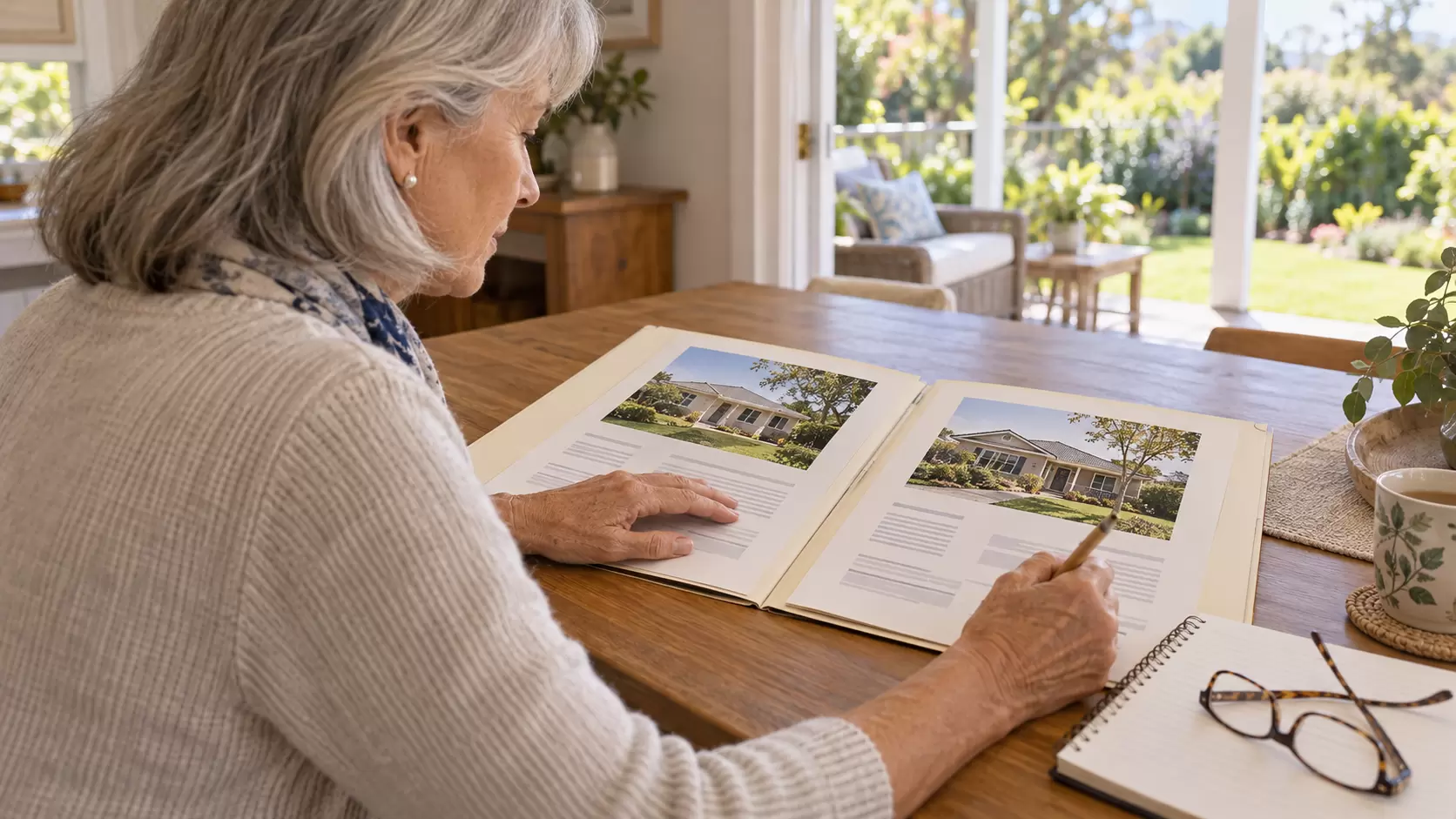
When two agents give you different appraisals for the family home, do not start by choosing the higher figure or splitting the difference. Ask what each estimate is based on. The gap may come from different comparable sales, different assumptions about presentation or a different view of likely buyers.
For a downsizer, this matters beyond the sale itself. An optimistic appraisal can quickly become the number you use when browsing your next home. Before that happens, work through the evidence behind each proposal.
Make sure both agents assessed the same home
Give each agent the same information and the opportunity to inspect. Explain which improvements you intend to complete and which you do not. Share relevant documents and known issues with both, rather than allowing one conversation to include details the other missed.
Ask whether the estimate assumes the property will be sold as it stands, freshly painted, styled or substantially updated. If one figure depends on preparation work, request that recommendation separately, including its likely cost and timing. Otherwise, you may be comparing two different versions of the property.
Put the comparable sales beside each other
Ask both agents to identify the sales that most strongly support their estimates. Record the address, sale date, confirmed result and the reasons each home is comparable.
Then look beyond bedroom counts. Consider the land, usable layout, condition, parking, outlook and street position. A renovated home on a quiet street may attract a different response from an unrenovated home beside a busy road, even within the same suburb.
Ask each agent where your home sits relative to every comparison and why. If they believe your property should achieve more, what specific advantage supports that view? If they expect less, what limitation have they identified?
NSW Government guidance says an agent's estimated selling price must be reasonable and supported by evidence, with relevant factors including recent comparable sales, location, property features and current market conditions. Asking for the reasoning is a sensible part of choosing an agent.
Separate completed sales from current competition
A nearby asking price is not a completed sale result. Keep the two in separate parts of your comparison.
Recent sales help explain what buyers have paid. Current listings show the alternatives buyers may inspect alongside your home. Ask how those alternatives compare with your property, rather than treating their advertised prices as proof of what yours will achieve.
If an agent refers to an exceptional local result, ask why it is relevant. Was the property genuinely similar, or did it offer something yours does not? One impressive sale should not do all the work in an appraisal.
Test the buyer argument
An agent may have a different view because they have recently dealt with buyers looking for a home like yours. Explore that explanation without asking for anyone's private details.
Ask what those buyers are seeking, which comparable homes they inspected and whether their budgets and timing appear suitable. A large database is less informative than a clear explanation of the relevant buyer group and how the agent plans to reach it.
Also ask what evidence would change the agent's view. Someone who can explain the uncertainty gives you more useful information than someone who simply repeats the headline figure.
Resolve the difference before building plans around it
Create one comparison sheet covering the estimate, supporting sales, preparation assumptions, buyer reasoning and unanswered questions. Send each agent the questions relevant to their proposal and ask for a written response.
If the gap remains substantial, seek an independent assessment rather than assuming the midpoint is correct. Keep your next purchase planning separate from an untested best case sale figure, and confirm affordability with your financial adviser or lender as appropriate.
Our agent selection service helps you compare proposals and the people behind them. If you are preparing to sell the family home, book an appointment with us before choosing an agent on price alone.
Frequently asked questions
Should I average two different appraisals?
Not automatically. An average does not resolve weak comparisons or different preparation assumptions. Identify why the figures differ before deciding which estimate is better supported.
Does the highest appraisal mean an agent is overpromising?
Not necessarily. The agent may have relevant evidence that another has missed. Ask them to explain it and apply the same scrutiny to the lower estimate.
What if there are few recent comparable sales?
Ask which older sales or nearby areas the agent has used, why those comparisons are relevant and what uncertainty remains. Fewer close comparisons call for clearer qualifications, not greater confidence.