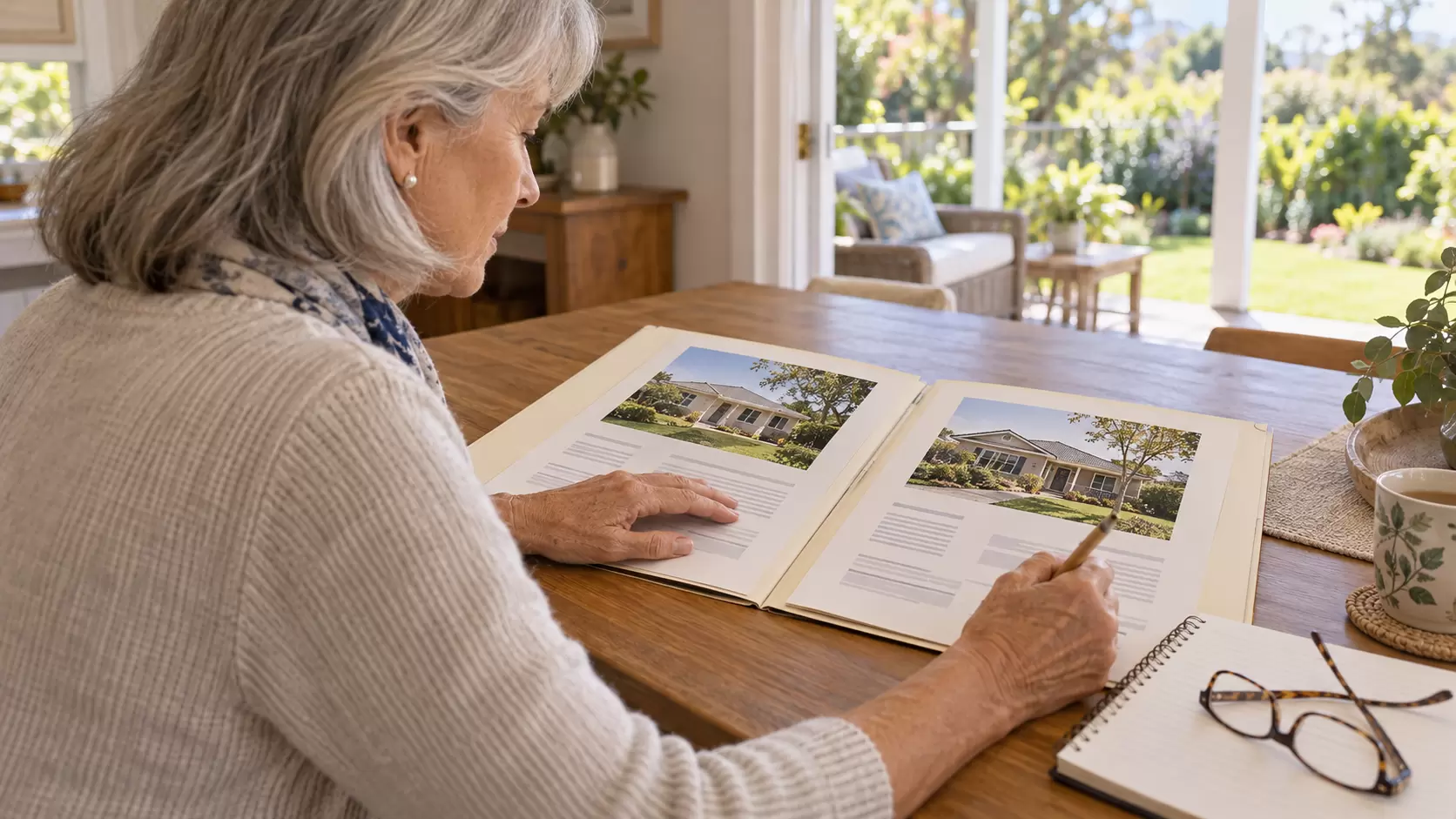

If you are ready to downsize and your partner is not, the next step does not have to be a sale campaign or another debate about moving. Start by agreeing on what you are willing to investigate together.
One person may see freedom from maintenance. The other may see the loss of a garden, a familiar neighbourhood or a room that makes their day enjoyable. A useful property brief needs to capture both perspectives, not simply the preferences of whoever starts the search.
Write two short briefs before making one
Before looking at listings, each of you can write down three things you want to keep about your current life and three things you would like to change. Be specific about the activity rather than the room.
For example, wanting a workshop may mean needing somewhere to leave a project set up between sessions. Wanting less garden maintenance may mean no longer being responsible for every weekend's outdoor jobs. Those needs deserve separate attention, even when they appear to point in opposite directions.
Include who currently does the cleaning, repairs, gardening and household organising. The same home can create very different workloads for two people. Make those tasks visible without turning the exercise into a tally of who does more.
Give every concern somewhere to go
Put your combined notes under three headings: what we agree on, what we need to find out, and what would make a move unsuitable.
Keep unresolved items visible. If one person wants to stay near friends and the other wants easier upkeep, both belong in the brief. Do not quietly remove the harder requirement because it narrows the search.
Turn questions into small research tasks. If the worry is losing space for a hobby, measure the space actually used. If the concern is leaving a favourite walking group, check whether suitable homes exist within a comfortable journey. If it is affordability, get the figures assessed by the appropriate financial adviser before treating an advertised price as your budget.
Agree on the purpose of an inspection
An inspection can answer a question without becoming a test of whether someone is finally willing to move.
Choose a small number of properties that help investigate your unresolved points. Tell each other beforehand that the purpose is research. Decide what each person wants to learn, rather than expecting both of you to arrive with the same enthusiasm.
Afterwards, make separate notes before comparing impressions. Ask what worked, what felt difficult and what still needs checking. A bright living room should not erase an unresolved concern about where someone will spend their working day.
Agree that any move towards an offer or sale campaign needs a fresh conversation. Looking together should not become an assumed commitment.
Compare moving with a realistic version of staying
Give staying the same attention as moving. What would need to change for the current home to suit both of you better? That might involve outside help, using rooms differently or addressing a particular maintenance problem.
For each option, note the practical work involved, the costs still to be confirmed and the concerns that remain. Do not compare an idealised new home with every frustration of the old one, or an effortless version of staying with every difficulty of moving.
Choose a time to review what you have learnt. That review is not a deadline to agree to sell. It is a chance to decide whether to keep researching, revise the brief or pause with a clear understanding of why.
Frequently asked questions
Should we inspect homes if one of us does not want to move?
Only if both of you are comfortable with it. Agree on a specific question the visit could answer. If an inspection feels like pressure, begin with floor plans or a discussion about your current home instead.
What if we like completely different properties?
Identify what each property provides, rather than arguing for a particular address. One may offer privacy while another offers convenience. Record both needs and investigate whether another option could meet them.
Can a buyers advocate decide which partner is right?
That is not the role. Property advice can clarify options and test assumptions, but the decision belongs to you. A search should reflect both people's priorities, including concerns that remain unresolved.
Start with a brief that represents both of you
At The Empty Nester, we help you define your buyer brief around your lifestyle, priorities and plans. If your ideas about the next home differ, book an appointment with us. We can help turn those ideas into practical property questions before you decide what comes next.