
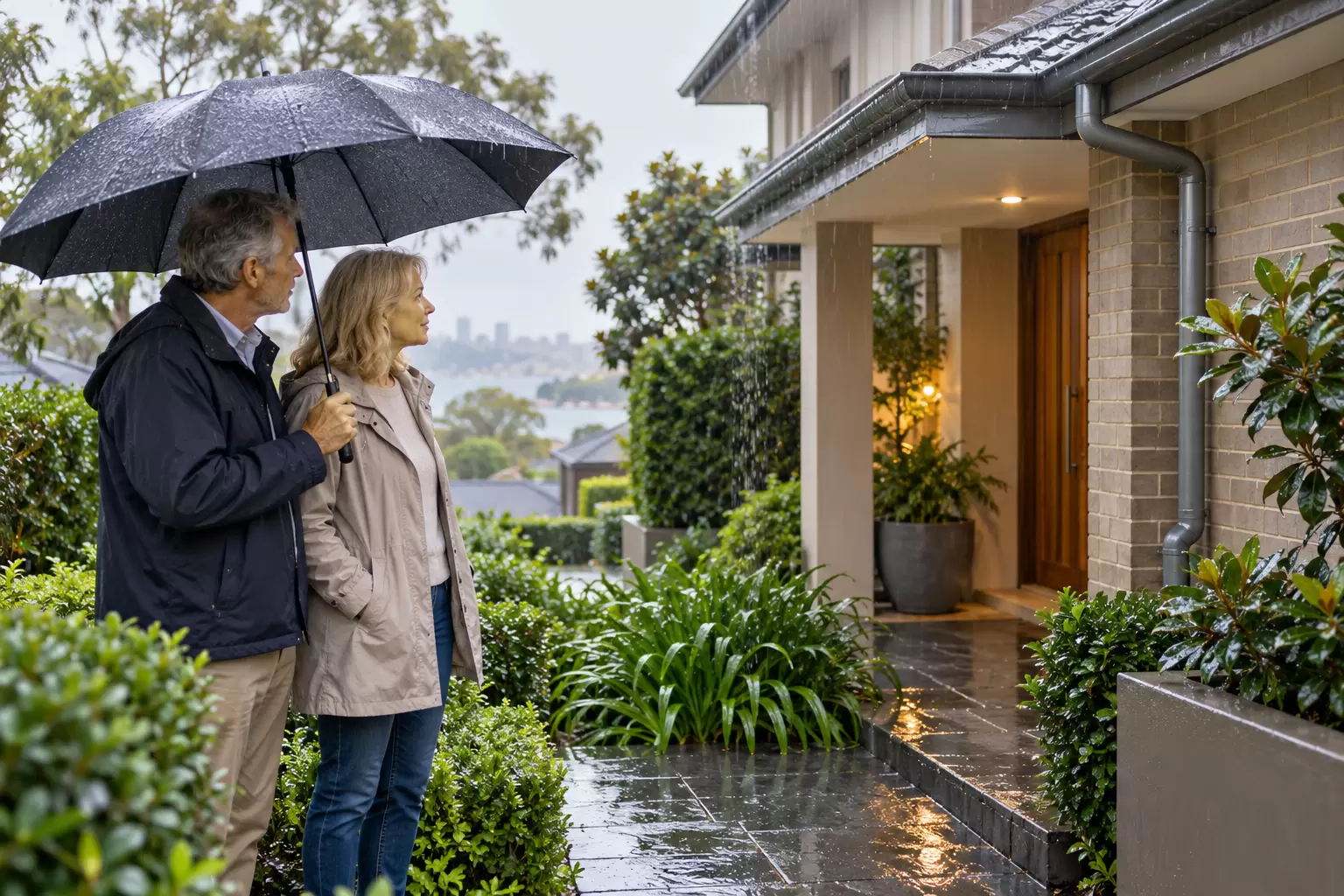
Most property marketing is designed for sunshine. The doors are open, the balcony is bright and the garden looks easy to manage.
A wet day answers different questions. Can you get from the car to the front door without being soaked? Does water move away from the building? Are common areas slippery or exposed? Can you hear the rain clearly inside?
Rain does not replace a professional building inspection, and a buyer should not diagnose defects from a single visit. It does give you useful observations to record and investigate before you commit.
Begin before you reach the front door
Notice the full arrival route. Look at the street, driveway, basement entry, visitor parking and path to the home. Water pooling across the route may be inconvenient now and more significant if mobility changes later.
Check whether there is a sheltered place to unload shopping or luggage. If you are considering an apartment, follow the route from the car space to the lift. If you are looking at a townhouse or villa, see whether the entry step, path and external stairs remain comfortable when wet.
These are lifestyle observations, not just maintenance checks. A low maintenance home should make difficult weather easier to manage.
Watch where the water goes
From a safe position, observe gutters, downpipes, drains, balconies and paved areas. The goal is not to inspect a roof or open a drain. It is to see whether water appears to move away from doors and walls, and whether any areas are holding water.
Look around garage entries, courtyards and ground floor doors. In an apartment building, notice basement ramps and common corridors. Ask whether pumps, drainage systems or known water issues are discussed in strata records, then have the relevant professionals review the documents.
Take photographs of anything you want examined later. Record the location and time so your building inspector, solicitor or strata inspector can follow up accurately.
Use your senses inside
Once inside, pause near windows, external doors, ceilings and built in cupboards. Look for fresh staining, damp patches, peeling finishes or condensation. A musty smell can justify further investigation, but it does not establish the cause.
Listen as well. Rain on a metal roof, balcony, awning or window can sound different from what you imagined during a quiet inspection. Check whether you can hold a conversation comfortably in the living room and bedrooms.
Natural light will also be at its weakest. If the home still feels comfortable on a grey afternoon, that is useful information. If key rooms feel dark, consider how much of your day you will spend there and whether lighting can improve the experience.
Look at shared spaces in an apartment
Wet weather can reveal how an entire building operates. Walk through the lobby, lifts, corridors, bin room and parking area where access is permitted. Notice wet floors, temporary buckets, strong odours or areas blocked from use.
These observations are prompts for due diligence, not conclusions. A strata report and building inspection provide broader evidence about maintenance, repairs and known issues. The NSW Government recommends that strata buyers obtain both a strata report and a building inspection report before buying.
Turn observations into professional questions
After the inspection, sort your notes into three groups: daily comfort, items to verify and possible deal breakers.
Daily comfort covers the route from the car, shelter, light and noise. Items to verify belong with the relevant professional. Possible deal breakers are conditions that conflict with your buyer brief even if the property is otherwise sound.
Our inspections and evaluations service helps buyers compare what a property promises with how it actually works, then coordinate the right next checks.
Inspect again when the conditions change
No single visit shows every condition. If a property remains on your shortlist, a second inspection at another time of day or in different weather can be valuable. Revisit the approach, noise, natural light and common areas rather than simply walking through the styled rooms again.
The aim is not to find a perfect property. It is to understand the property well enough to make a clear decision.
Frequently Asked Questions
Should I avoid inspecting property in the rain?
No. Wet weather can show how access, shelter, drainage and common areas perform. Keep the visit safe and treat your observations as questions for qualified professionals.
Does a dry interior mean there are no water problems?
No. One inspection cannot rule out hidden or intermittent issues. A professional building inspection and, for strata property, a strata report review remain important.
What should I photograph during a wet weather inspection?
Photograph specific areas you want investigated, such as pooling water, staining or an exposed access route. Record where each image was taken and share it with the appropriate inspector or adviser.
If you want a practical second set of eyes on a property, book a conversation with The Empty Nester. We can help you inspect, compare and investigate before you buy.